
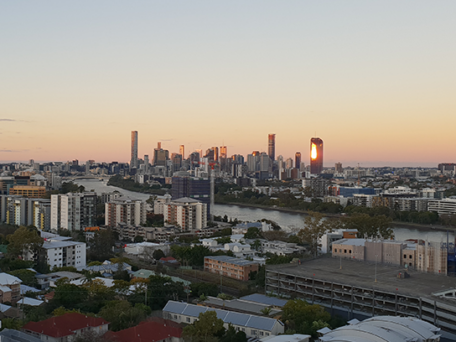
Property prices in Melbourne, Sydney and Canberra are being tipped to fall dramatically by up to 8 per cent over the next 12 months, while those in Brisbane, Adelaide and Perth are forecast to rise by up to 9 per cent.
The new Domain Forecast Report FY2027 tells a striking tale of likely winners and losers in the national real estate scene through June 2027.
It points to the combination of interest rate hikes, federal budget tax reforms, global and domestic uncertainty and local demand-and-supply mismatches as triggering the wide range of results.
“The research points to quite a diverse picture,” Domain chief residential economist Dr Nicola Powell says.
“Any change in interest rates affects cities like Sydney, Melbourne and Canberra the most because buyers there tend to borrow more, while they tend to be better at providing more housing supply.
“On the other hand, Brisbane, Adelaide and Perth have very under-supplied housing markets, and demand is still ahead of where supply is. They’ll still have price growth, but it will be more subdued.
“It’s like they’ve been racing along the highway and have just hit a school zone and had to hammer on the brakes. Some areas’ prices were growing over 20 per cent a year, and now they’ll be below 10 per cent, which is a massive slowdown.”
The report predicts that Melbourne will see the biggest house price drops of between 4 and 8 per cent, Sydney the next at 3 to 7 per cent and Canberra either flatlining or falling up to 4 per cent.
Meanwhile, Perth house prices are expected to rise the most, by 5 to 9 per cent; Adelaide next, at 4 to 8 per cent; and Brisbane, by 3 to 7 per cent.
Unit prices are forecast to outperform houses, with prices falling just 1 to 3 per cent in both Sydney and Melbourne, and 0 to 4 per cent in Canberra.
In Perth, they’re expected to surge 7 to 11 per cent, in Brisbane by 5 to 9 per cent and in Adelaide by 4 to 8 per cent.
Median house prices in the combined capitals will then range between a 2.5 per cent fall and a modest 1.5 per cent rise, while units will move from 3.3 per cent to -0.7 per cent.
“So, what we’ll be seeing is much more measured price growth than in the past few years in some areas, and a marked fall in others,” Powell says.
“We’ll see the more affordable markets doing well and the higher-priced property being affected most.
“In Australia, we’re seeing gross domestic product growth slowing, unemployment rising, employment falling and the housing market slowing.
“But a lot depends on the international outlook too, and factors like whether the Strait of Hormuz will be open. Prices might start gradually recovering from mid-2027.”
Richardson & Wrench managing director Andrew Cocks sees the market as being driven by sentiment. With all the domestic and global headwinds creating enormous uncertainty, it’s, in turn, providing a drag on prices.
“But hopefully the price falls in our two largest cities will be relatively short term with some stability occurring in the global sphere later,” he says.
“The federal budget wasn’t helpful, either, in boosting sentiment, and that is undermining investor confidence, which has an impact on the market as a whole.
“Long term, however, Australian real estate is very secure and one of the best markets in the world in terms of product and different options, but it isn’t absolutely resilient to the impact of negative sentiment.”
Chief executive of Belle Property and Hockingstuart, Nick Boyd, is also forecasting much more subdued overall growth and has seen some Melbourne home prices fall below replacement value.
“But I don’t believe we could ever see Melbourne house prices falling as much as 7 or 8 per cent,” he says.
“They’re already at such attractive prices, they’re attracting buyers from elsewhere in search of value.
“Certainly, Sydney has come off the boil, though, but it is a very resilient market and can bounce back very quickly as well.
“We also believe that Brisbane, Perth and Adelaide will see more subdued growth but they are robust cities and their prices will potentially still increase.”
National buyers’ agent Simon Pressley, head of property market research at Propertyology, says those three markets will now experience price growth that’s more akin to normal years, rather than the staggering rates they’ve seen in the past six years.
“And we’ll see some locations rise, others fall, and still others barely move at all,” he says.
“But while Sydney, Melbourne and Canberra will be the worst-performing capital cities, they’re still undersupplied in the long run.
“But it’s not all doom and gloom. There will be large parts of Australia, particularly in the regions, where we’re seeing strong growth, with agribusiness very strong and domestic tourism strong despite the cost-of-living rises.”
Source: Brisbane, Brisbane, Perth and Adelaide market forecasts are still rising, Sue Williams for Domain